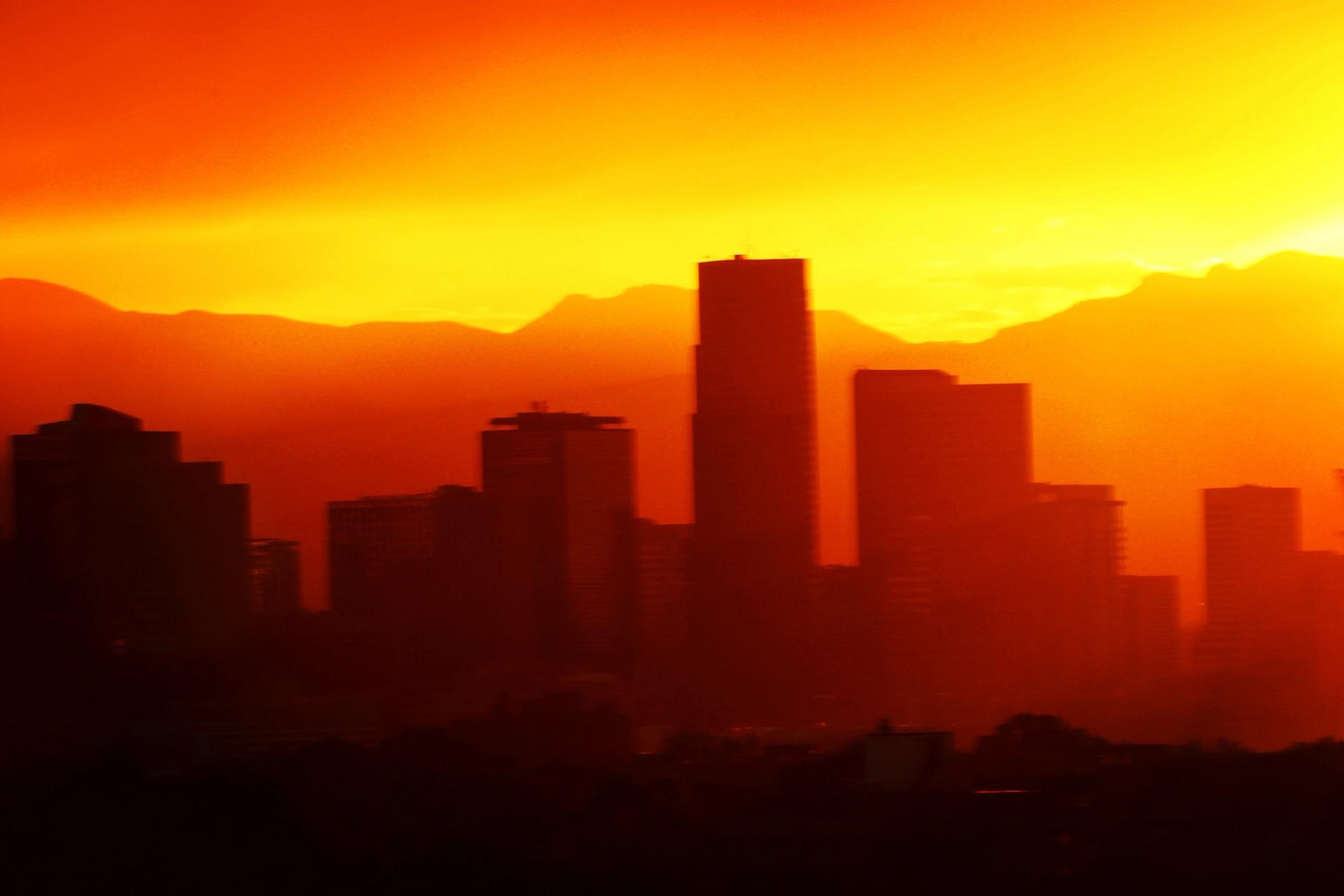
An unusually early heat wave shattered temperature records across the country in June, but things are just warming up for Denver 🥵 Local meteorologists are forecasting at least five consecutive days of temps hovering near the 100s this week. The scorching heat will likely be even worse for those in the heart of the city thanks to something called the urban heat island effect.
What Causes the Heat Island Effect?
Firstly, buildings, roads, and cars — things that are good at insulating heat — all absorb and re-emit the sun’s rays, causing urban areas to be 1-10 degrees higher than more natural landscapes. Trees, water, and vegetation naturally cool the air by providing shade and evaporating surface water.
Additionally, vehicles, air-conditioning, and industrial facilities — things that are found in densley constructed cityscapes — all produce heat. Narrow streets and tall buildings also form urban canyons, blocking natural air flow that would otherwise cool things down.
Heat Island Impacts
Besides the discomfort of living in a constant state of sweat (or is that just me?), heat islands also harm the environment. Higher temperatures typically lead to more air-conditioning, higher energy consumption, and more greenhouse gas emissions. The heat is also a serious threat to people living unhoused and disproportionately affects low-income populations.
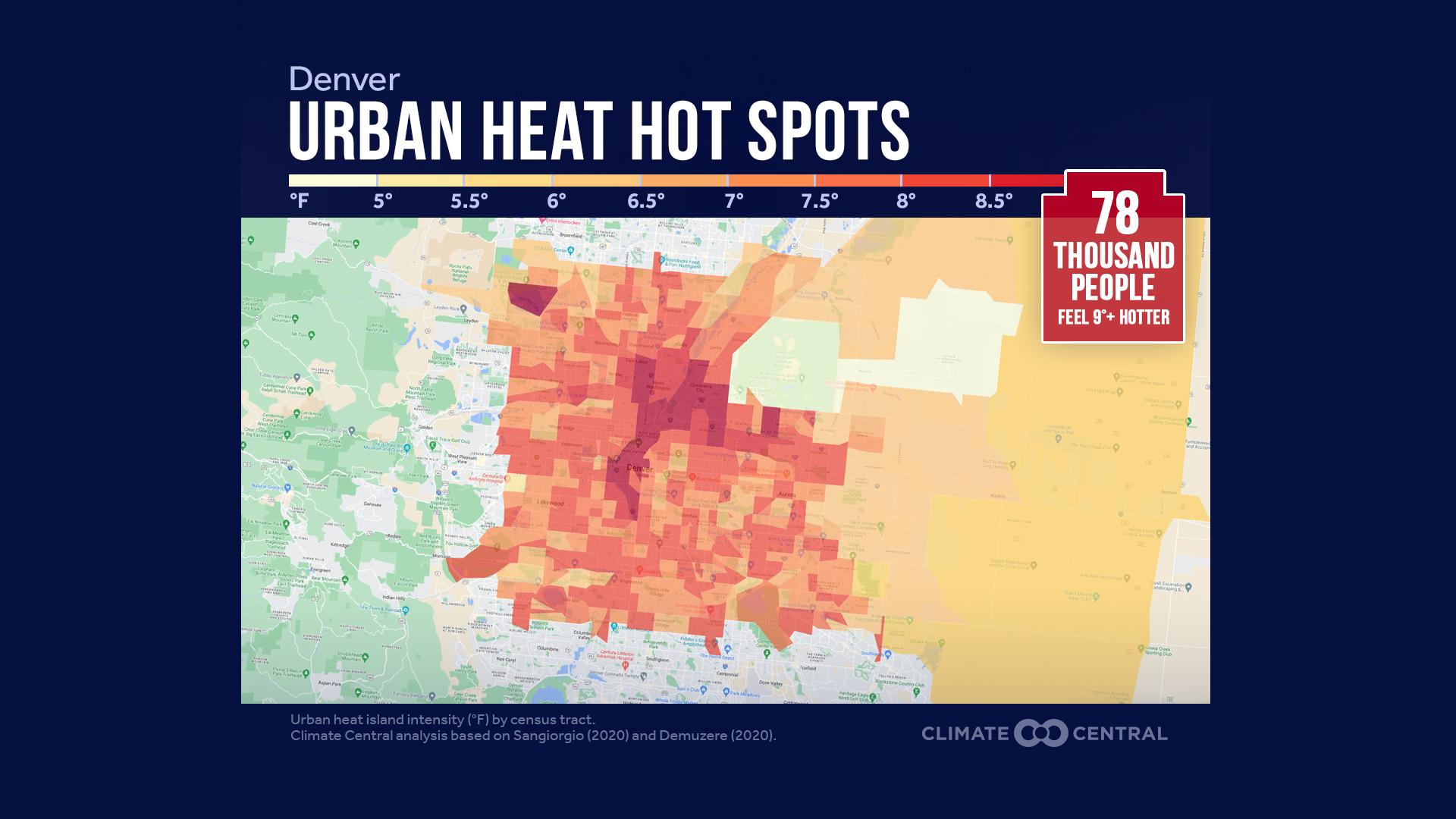
This 2023 heat map of the metro Denver area accentuates the difference in temperature between urban and rural landscapes. (Climate Central)
How To Avoid the Heat
- Identify Denver’s hot pockets: You can use this real-time heat map from Meteoblue to gauge the hottest areas in the city.
- Head to the park: Dense tree coverage and grass mean temperatures can be up to 10 degrees cooler than denser parts of the city. (These are our favorite Denver parks.)
- Museums, rivers, and ice labs: Here are 10 creative ways to beat the heat around Denver.
Help Create Long-Term Solutions
The best way to mitigate the heat island effect is to increase plant and vegetation cover. Roadside trees, green roofs, and parks are all examples of how cities can do this more effectively. Tech such as cool roofs and cool pavement which reflect more sunlight can also help.
- Get involved: Local nonprofit The Park People is committed to growing a cooler, greener Denver through volunteer work and fundraising for urban forestry projects.