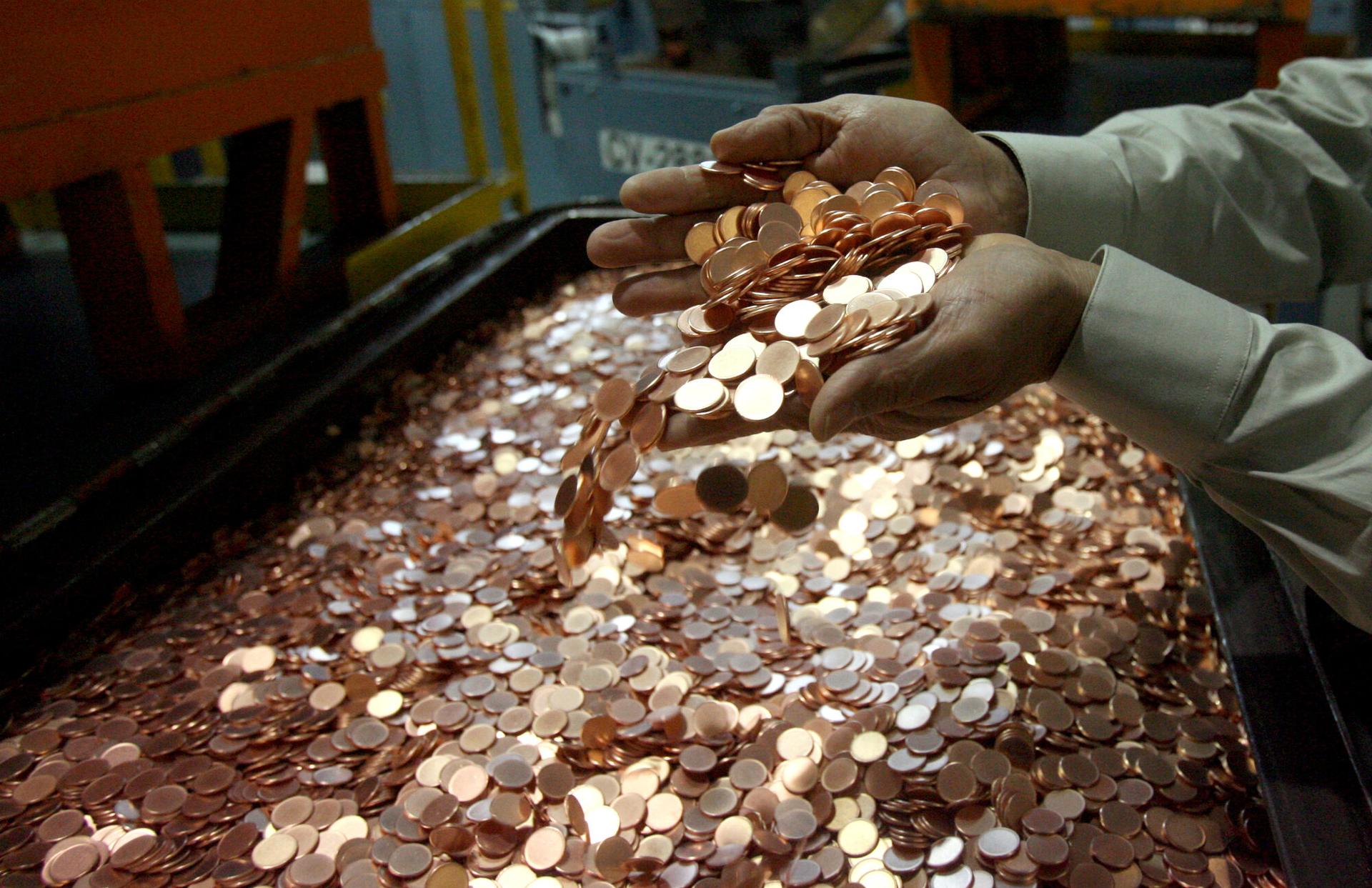
Earlier this month, President Trump proclaimed via social media that making pennies was a waste of government resources and that production should be halted. He’s not wrong — it costs roughly 3.7 cents to make and distribute the one cent currency. The Denver Mint is one of only two mints in the country still producing the penny, contributing more than a billion and a half of what’s in circulation, which means the end of the little copper coin would also signify the end of a long Denver era.
The Original Mint on Market Street
Founded in 1860, Denver’s first “freelance mint” was the Clark, Gruber & Co. Bank and Mint located at the corner of 16th and Market streets. The bank, assayer's office, and money factory was built out of necessity — precious metals were flowing into the region from mining exploits in the Rocky Mountains and folks were using bags of literal gold dust as currency. Customers could deposit that gold with Clark, Gruber & Co., who would mint it into coins and, eventually, paper currency as well.
While the company helped establish financial norms in the area during this busy time for a growing community, an official U.S. mint would be created through an act of Congress in 1862. Clark, Gruber & Co.'s minting portion of the business would be purchased by the government, and turned into the Denver Mint Assay Office in 1863. Though the city now owned the machinery to make the coins, it wouldn’t actually start currency production immediately. In fact, for the first few decades of its existence, the Denver mint was just an assay office — a facility where precious metals like gold and silver were tested for purity and quality.
The Creation and Construction of Denver’s U.S. Mint
In 1895, Congress formally authorized Denver to manufacture coins, but a newer, bigger facility was needed. Currency production would finally begin in 1906 at the official building we know today at West Colfax Avenue and Cherokee Street. Originally designed in the Second Renaissance Revival style, multiple additions were made to the structure over the ensuing decades to accommodate increased production.
By the 1960s, growing concerns that the facility was too outdated and in need of more space led to serious conversations about a big move. Other locations in the Mile High were considered, and even Albuquerque, New Mexico. But in the end, Denver was able to keep this federal institution in the same building and on the same land where it had been located since the turn of the century. A new entrance was added in 1992 to welcome the thousands of school children, tourists, and local enthusiasts the site sees each year; more production space was added to the building in 1996.
The Mint Today
Today, Denver is home to one of the four coin manufacturing U.S. Mint facilities in the country, along with Philadelphia, San Francisco, and West Point — but only the Mile High and Philly produce the endangered penny. While the Denver facility makes 40,500 coins per minute and loses money on those more expensive-to-produce pennies, it makes up for it with the production of dimes, quarters, and half dollars, which make a profit. They also manufacture special edition coins and uncirculated coin sets that bring in the real dough — in 2024, the Denver Mint’s profits contributed $50 million to the city’s general fund for paying down other debts. So, even if we do say goodbye to the penny, there’s still plenty of currency for the Denver Mint to produce, and lots of people who are still intrigued by the 119 year-old institution!
Special thanks to the Denver Public Library, Westword, Colorado Encyclopedia, The Denver Gazette, and the U.S. Mint website for their reporting and additional resources on this topic.